


|
Top Value develops artificial neural networks for you, which are trained using your company’s own data to provide you with business-relevant insights. If you feel your business could benefit from implementing its own neural networks, please get in touch with us; we’d be happy to advise you.
The following introduction to AI and artificial neural networks explains the concept in detail.


|
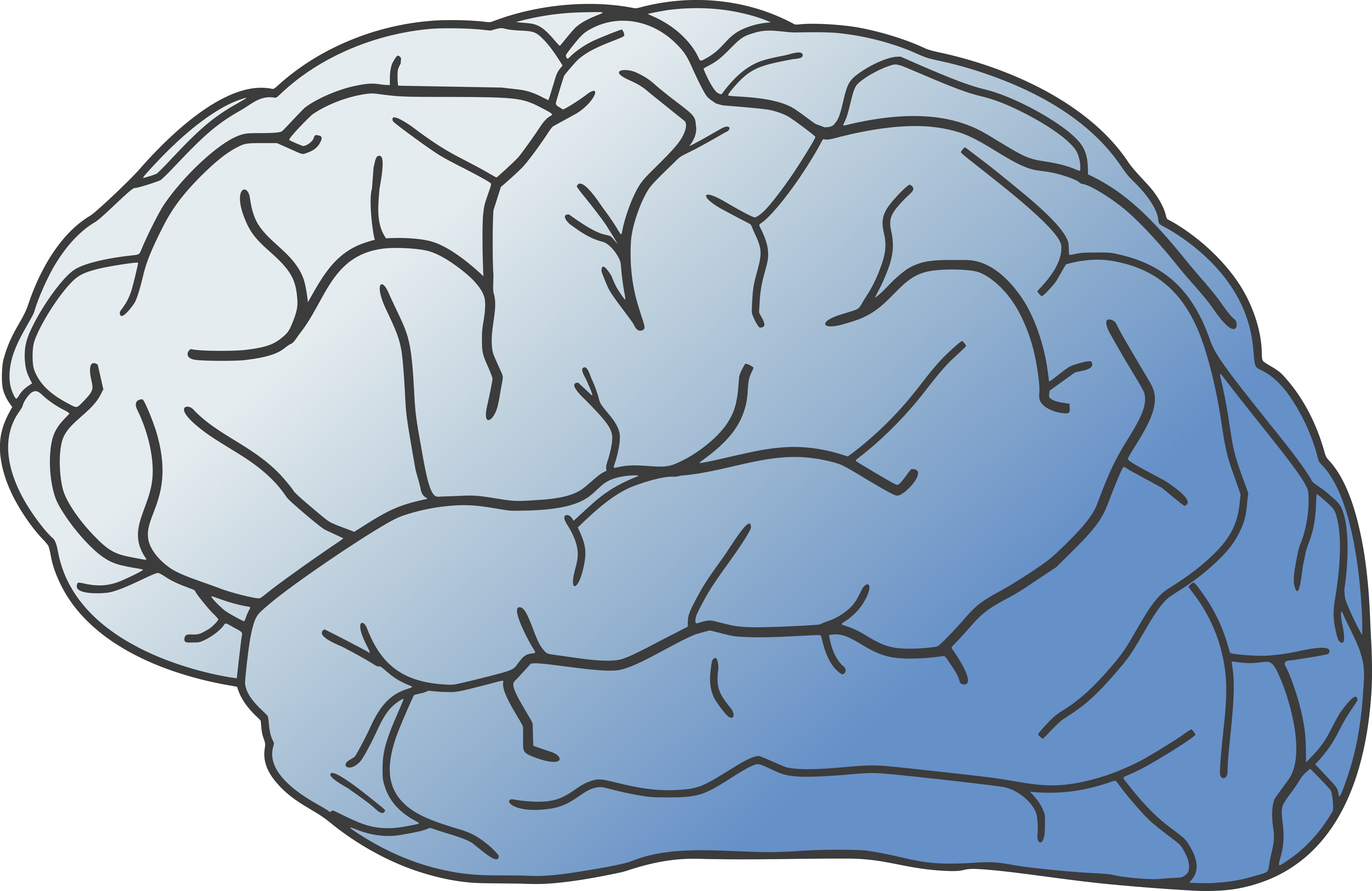
A computer is superior to the human brain in many respects. For example, it generally calculates much faster and more accurately than a human being. Computer-assisted information processing has very specific advantages over human capabilities. A computer can process, calculate and store data much faster and more accurately than a human being, and retrieve it at any time. Human memory is incomplete, and some stored information is eventually forgotten.
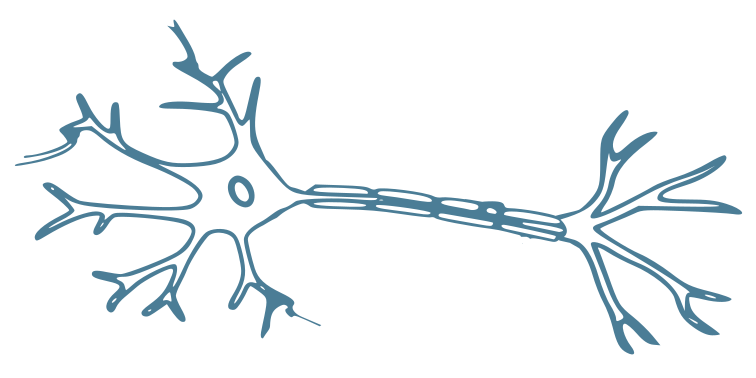
However, a specific weakness of computer systems lies in sequential information processing, which often leads to excessively long processing times for complex tasks. Human information processing, on the other hand, takes place largely in parallel. Nerve cells, which interact via electrical impulses, communicate with one another by sending a signal as soon as the sum of the received signals exceeds a certain threshold. The possibilities offered by parallel processing, with its capacity for simultaneous information exchange, enable the human brain to handle complex tasks quickly and efficiently. Unlike a computer, humans are able to recognise relevant patterns seemingly effortlessly, even when the data is incomplete or noisy.

|
The term artificial intelligence (AI) was first coined in 1956 as part of a scientific research project (the Dartmouth Summer Research Project on Artificial Intelligence).
The core message of this project was the assertion that it would be possible to make enormous strides in machine problem-solving within a very short time. These advances would be so significant that machines would be capable of solving the sort of problems currently reserved for humans. According to the project’s statement, such a task could be accomplished within a single summer. Despite occasional advances, the prediction proved far too optimistic. AI became known for promising more than it could deliver.
The resurgence of AI is primarily attributable to the success of the annual ImageNet competition, which took place from 2010 to 2017. This annual competition promoted and assessed progress in the field of computer-aided image recognition and classification. The success of this competition sparked interest not only within a small AI community, but also across the wider business world. The breakthrough is primarily due to a combination of various factors. Essentially, the technology utilises the concept of biologically inspired artificial neural networks.
Artificial neural networks (ANNs) allow a computer to recognise complex patterns based on training data and to achieve a high degree of parallelism in information processing. The functioning of artificial neural networks is modelled on their biological counterpart, even though they do not operate on the same physical and chemical basis. Artificial neural networks represent an abstraction of a biological model; they are therefore not a replica of the biological model.
|
|
ANNs are modelled on the structure of the human brain and have seen a huge surge in popularity in recent years. In many applications, they simulate mental processes; however, the way their various elements function is often not based on the model of natural neurons. In most applications, what matters is not the similarity to the natural biological model, but rather the effective and efficient use of methods for data processing and analysis.

|
ANNs form a specific category of machine learning (ML) models. In machine learning (such as ANNs or other techniques like support vector machines), algorithms learn to recognise patterns in data. They do not follow rigid rules, but analyse large amounts of data, which enables them, amongst other things, to perform analyses and calculate probabilities.
|
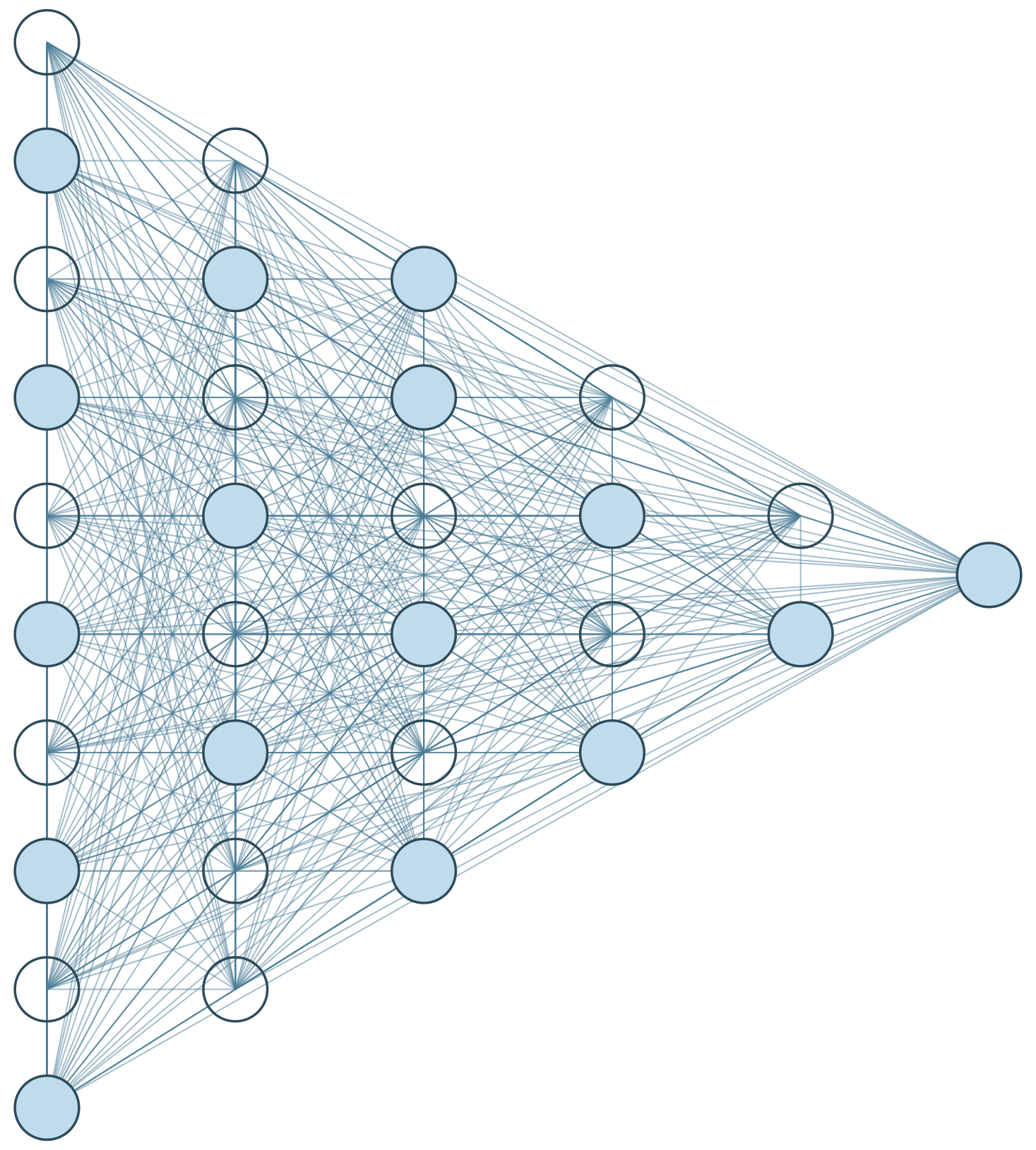
ANNs consist of interconnected ‘neurons’ arranged in layers. They form the backbone of machine learning by recognising complex patterns in large amounts of data, thereby enabling numerous applications. Artificial neural networks are based on a biological model and represent an abstraction of that model. However, they are not replicas of biological neural networks.
|
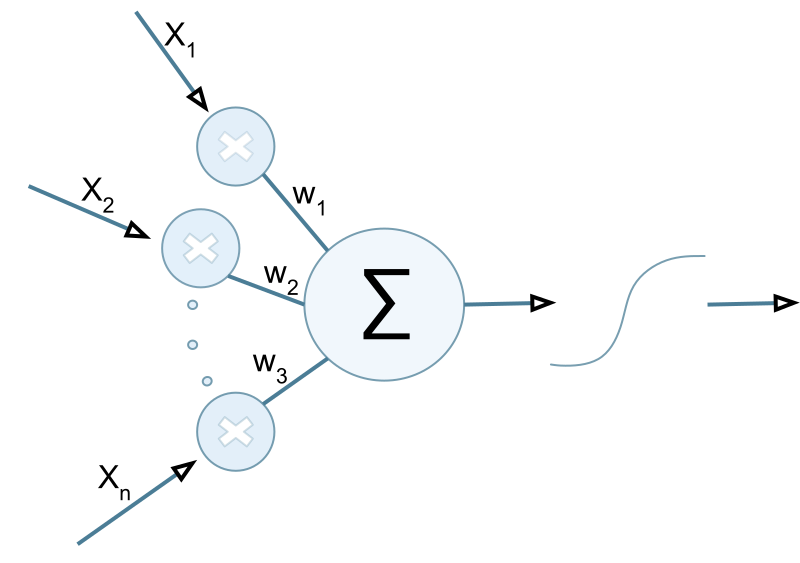
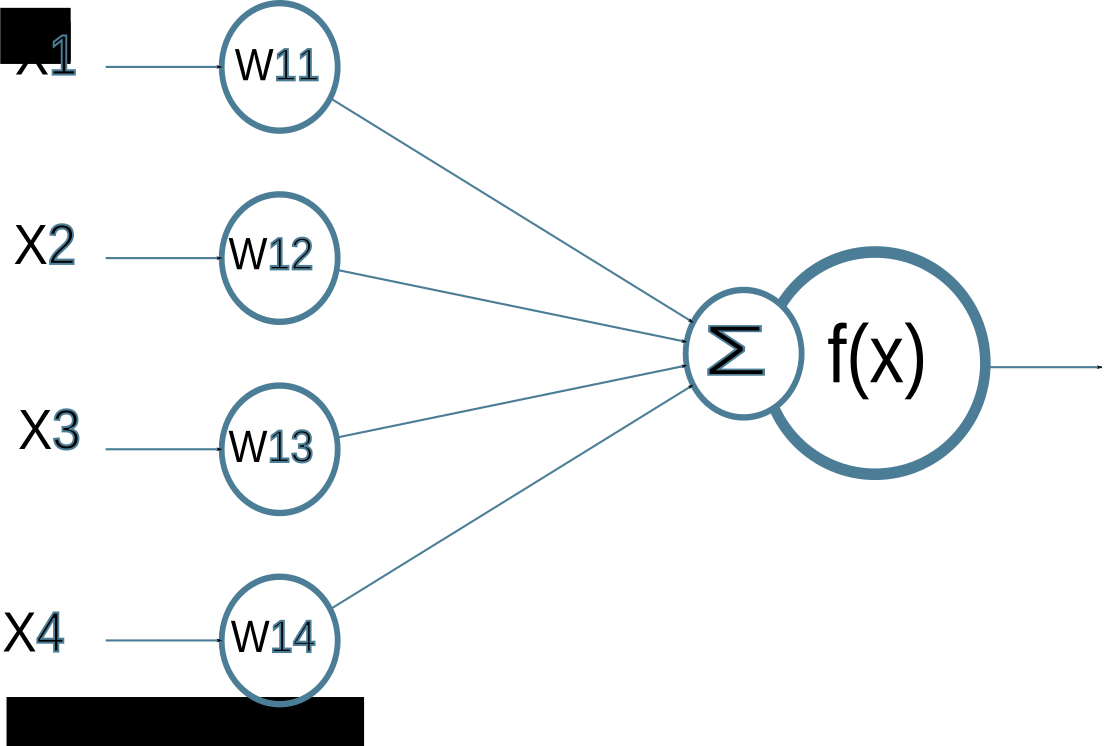
ANNs consist of a network of neurons characterised by a large number of connections between them. The strength of the connection between individual neurons in the neural network is determined by weights. When training the network, these weights are adjusted until a specific input produces the desired output.
ANN’s can approximate functions of any complexity and often provide solutions to problems where an explicit software implementation would be too costly, uneconomical or unfeasible.
AI and artificial neural networks (ANNs) now have far greater computing power and access to significantly more extensive training datasets.
|
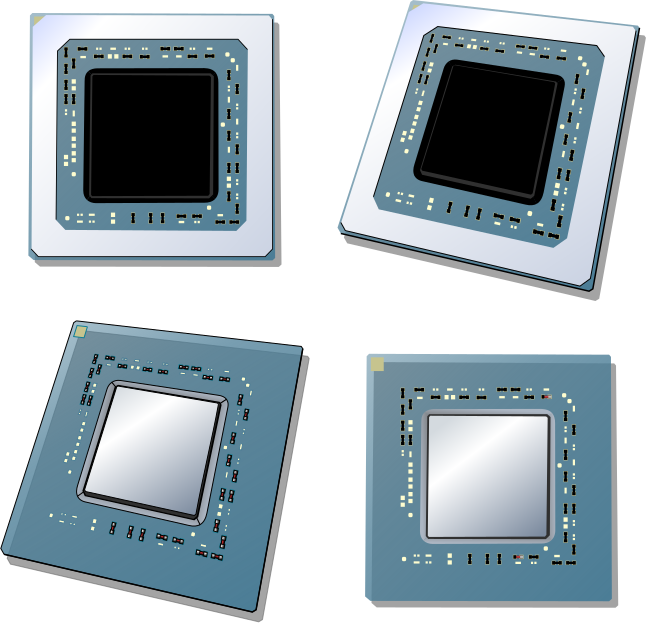
Computing power is a crucial factor in the application of artificial neural networks. On the one hand, the computing power of computer systems has improved considerably in recent years; on the other hand, specific advances have also been made regarding the architecture required for neural networks.
|
In recent years, the volume of data worldwide has experienced explosive growth. The amount of data generated globally has risen remarkably; today, more than two and a half times as much data is generated globally as was the case five years ago.
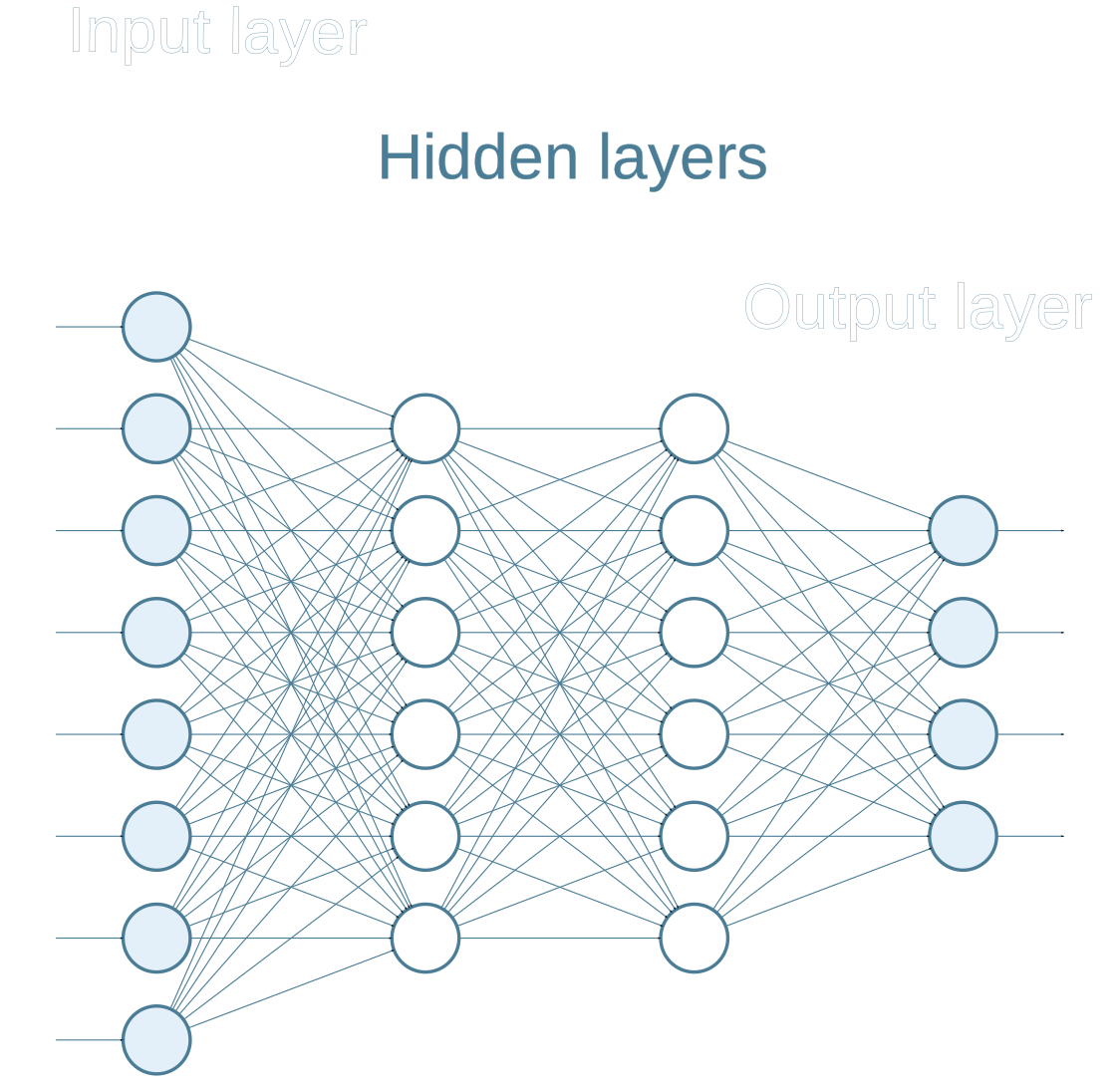
An artificial neural network consists of several layers of artificial neurons:
|
The input layer is the first layer of the neural network. It receives the raw data. Each neuron in this layer represents a feature of the input.
The hidden layers are the layers between the input and output layers. An artificial neural network can have one or more hidden layers, with the neurons in these layers often connected to all the neurons in the previous layer. The artificial neurons in the hidden layer enable the network to filter out increasingly complex and abstract features.
The output layer provides the final result. Depending on the task, the output may be, among other things, a single number (regression) or probabilities for different classes (classification).
|
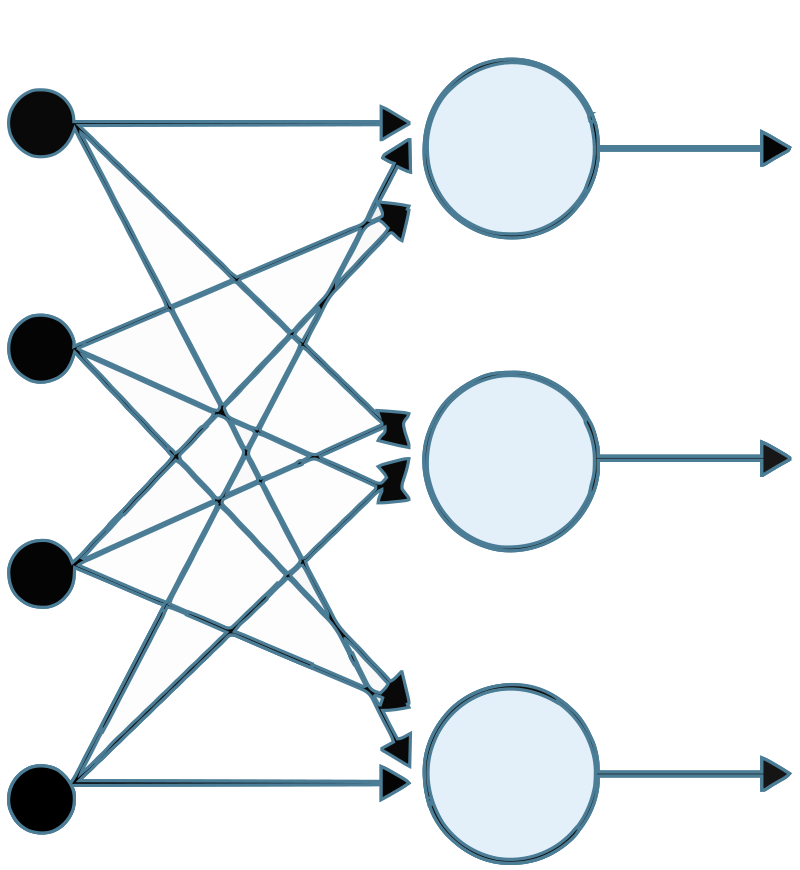
A feedforward network (FNN) is the simplest and most basic type of artificial neural network. In this architecture, information flows in only one direction (from the input layer through one or more hidden layers to the output layer). There is no feedback, which means that the output of one layer is simply passed on to the next layer. Feedforward networks are suitable for tasks where the inputs are independent of one another and have no specific order. Feedforward networks have no memory.
|
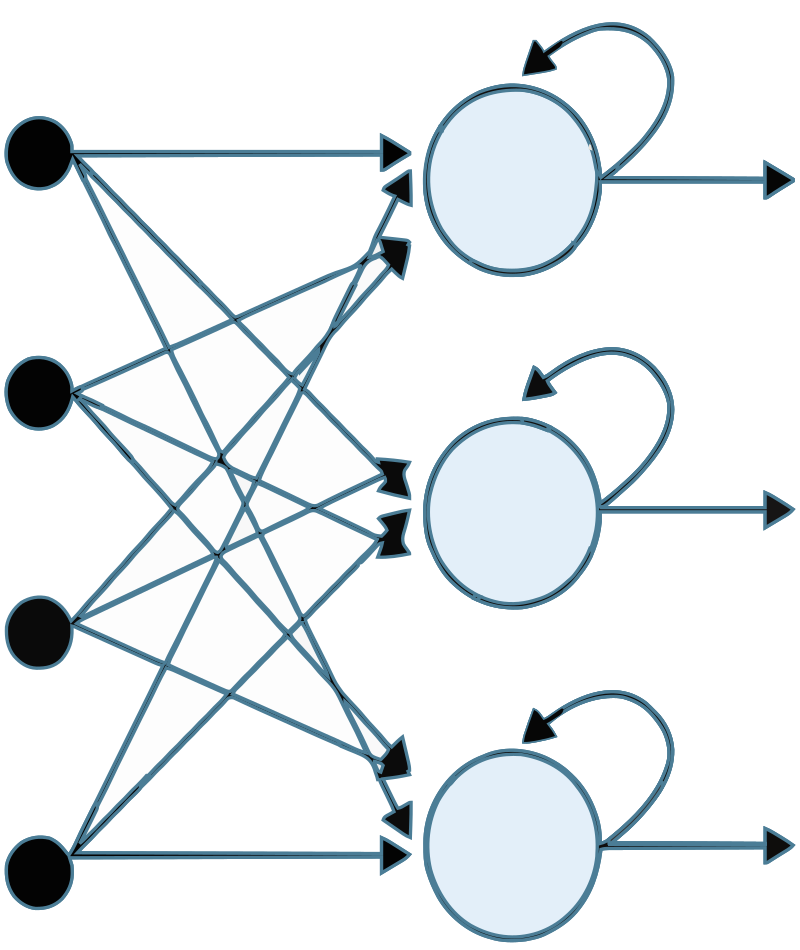
A recurrent neural network (RNN) is a special type of neural network suited to processing sequential or time-dependent data. Unlike feedforward networks, RNNs have feedback connections that allow them to pass information from previous steps to the current step, giving the network a kind of short-term memory (though no long-term memory and therefore no ability to recognise long-term dependencies). These networks are well suited to time series forecasting (such as forecasts based on financial market data).
An artificial neural network can be trained in various ways:
|
A neuron is a processing unit that aggregates the values received via weighted connections and determines an activation state by applying an activation function. A neural network consists of a group of neurons connected to one another by directed and weighted links.
Each link between the neurons has adjustable weights. Through a process known as training, these weights are continuously optimised until the network is able to make reliable and accurate predictions.
An artificial neural network can be trained in various ways:

|
In supervised learning, the network is trained using labelled data, where each input is associated with a correct answer. The network learns to match inputs with the correct outputs by minimising errors.

|
In unsupervised learning, the network is trained using unlabelled data. The network learns to recognise hidden patterns, structures or groupings in the data without being given correct answers.

|
In reinforcement learning, the network learns through interaction with an environment. It receives rewards or penalties for its actions and attempts to maximise the total reward over time.

|
In transfer learning, a model that has already been trained on a dataset for a specific task is reused and then adapted to a new, related task. Instead of training a neural network from scratch, a pre-trained network is used and further refined using a smaller, specific dataset.
|
In the past, various AI techniques often proved to be nothing more than short-lived trends. The difference today is that many AI applications have reached market maturity or have proven themselves in tests and in practice. AI is already a useful tool and is finding its way into various sectors of the economy on an ever-increasing scale and at an ever-increasing pace.

|
The great flexibility of neural networks can prove to be both an advantage and a disadvantage. It is important to note that, under certain conditions, an algorithmic approach may prove to be more advantageous. If you see a need within your company to implement your own neural networks, or would like to explore this further, please feel free to contact us without obligation. We will carry out the necessary assessments for you and, if required, build the networks and train the models accordingly. Following model development, we routinely conduct an appropriate assessment of model quality and offer support with training and implementation.
Please do not hesitate to contact us for a no-obligation discussion.
Contact details for Northern, Eastern and Southern Switzerland:

|
Top Value GmbH Bachweg 1b6410 Goldau |

|
Phone: +41 (0) 41 552 11 30 |
Contact details for Western Switzerland:
|
|
Top Value Sàrl Route de St-Cergue 461260 Nyon |
|
|
Phone: +41 (0) 22 565 23 10 |
|
 |
Fax: +41 (0) 22 539 41 24 |
Contact enquiry via the internet:

|
Online form: |
||
 |
Link | ||
Company locations

Goldau |
|
|
Top Value GmbH 6410 Goldau |
|||
|
|
Phone: +41 (0) 41 552 11 30 |
|
|

Nyon |
|
|
Top Value Sàrl 1260 Nyon |
|||
|
|
Phone: +41 (0) 22 565 23 10 |
|
Top Value is dedicated to meeting the needs
|